


Nepal at a Turning Point: Why Factory Farming Is the Wrong Path

When we think of farming in Nepal, we picture chickens scratching in courtyards, goats grazing on hillsides, and pigs rooting in village mud. For generations, animals have been part of smallholder farms that worked in balance with crops and forests. But this picture is fading fast.
Factory farming, the mass confinement of animals in industrial sheds and cages is spreading into Nepal. Battery cages for egg-laying hens are multiplying in the Kathmandu Valley. Pig sheds are appearing near urban centres. On the surface, it looks like progress: more eggs, more meat, more efficiency. But beneath the promise lies a dangerous reality.
Pollution and Climate Damage
Industrial farms concentrate thousands of animals in one place. Their waste manure, urine, feathers doesn’t vanish. It seeps into rivers, contaminates groundwater, and fouls the air. The stench of ammonia is not just unpleasant; it causes respiratory illness for workers and nearby families.
Globally, industrial livestock is responsible for 14.5% of greenhouse gas emissions, more than all transport combined. Methane from manure and nitrous oxide from fertilisers drive climate change. By importing soy and corn feed, Nepal indirectly fuels deforestation abroad. A country that once led the world with its community forestry program now risks undermining its own climate commitments.
A Breeding Ground for the Next Pandemic
Factory farms are also incubators for disease. Crowded sheds of stressed, genetically similar animals are perfect breeding grounds for bird flu and swine flu. To keep animals alive, antibiotics are used not as treatment but as routine insurance. This misuse creates “superbugs” bacteria resistant to the medicines humans rely on.
The World Health Organisation warns that antimicrobial resistance could kill 10 million people annually by 2050. Nepal, with fragile health systems and porous borders, cannot afford to invite such a threat.
The Silent Victims
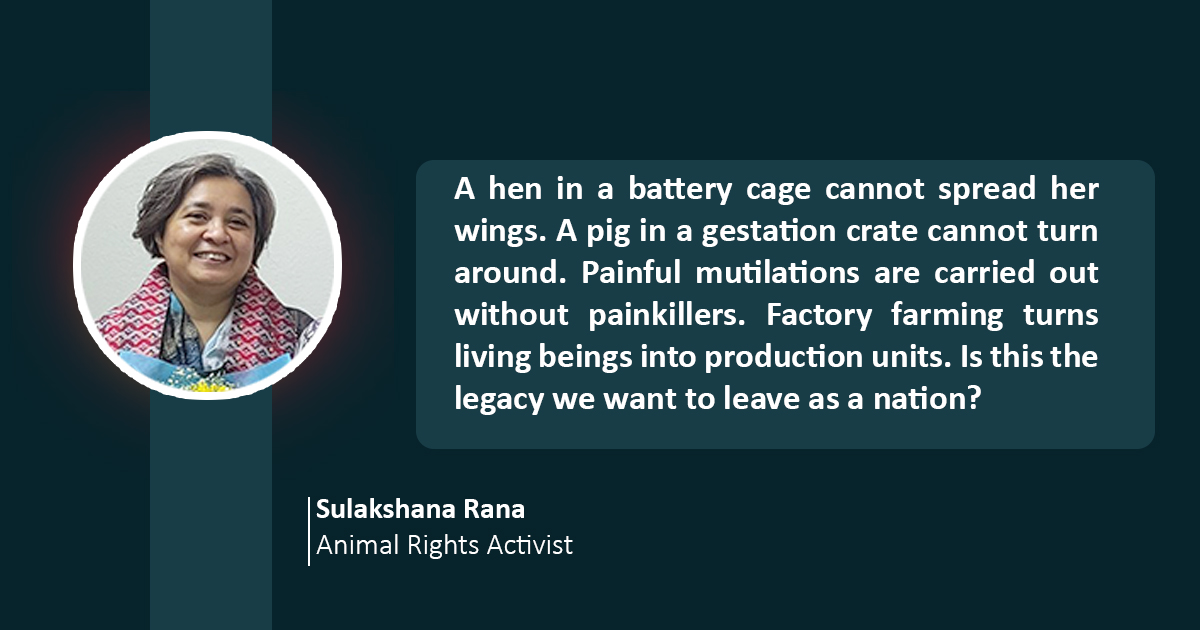
We cannot ignore the suffering of animals themselves. A hen in a battery cage cannot spread her wings. A pig in a gestation crate cannot turn around. Painful mutilations are carried out without painkillers. Factory farming turns living beings into production units. Is this the legacy we want to leave as a nation?
Impact on Communities
Factory farms also harm people. Pollution disproportionately affects low-income families who live near these operations. Small farmers the backbone of Nepal’s rural economy, are driven out by industrial competitors. Food sovereignty erodes as farmers become dependent on imported feed and foreign agribusiness models.
A Better Future Is Possible
The good news? Nepal still has a choice. Other countries are already moving away from factory farming. Sweden banned battery cages in 1988. Germany is phasing out pig crates and investing billions in humane alternatives. Singapore became the first country to approve cultivated meat. Even China has urged citizens to cut meat consumption in half.
Nepal can follow a different path:
- Promote cage-free and free-range systems that align with agroecology.
- Ban routine antibiotic use before it fuels a health crisis.
- Invest in local feed sources instead of importing deforestation-linked soy.
- Support consumer awareness so higher-welfare products become the norm.
Every Plate Counts
Factory farming may look efficient, but it is a false economy. The hidden costs of polluted rivers, new pandemics, antibiotic resistance, and animal suffering are far greater than the short-term profits.
Every plate is political. By choosing cage-free eggs, reducing meat consumption, and supporting local farmers, we vote for the kind of food system we want. Policymakers must also act before the model becomes entrenched and irreversible.
Nepal is at a crossroads. One road leads to pollution, pandemics, and dependence. The other leads to sustainability, resilience, and dignity for animals, people, and the planet. The choice is ours.
(Rana is animal rights activist)
Trending
Related News

Latest
-

Classic Tech Records Highest Customer Growth as Nepal’s Digital Connectivity Demand Accelerates
-
Nepal at a Turning Point: Why Factory Farming Is the Wrong Path
-

Riddara RD6 EV Pick Up Launches Exchange Offer In Nepal
-

Shop More, Save More with Daraz Nepal’s 5.5 Best Price, Best Deals
-

Unveiling the Galaxy S25 Ultra 1TB: Samsung’s Tera-fic New Flagship Variant Kicks Off the New Year with Unprecedented Storage Power